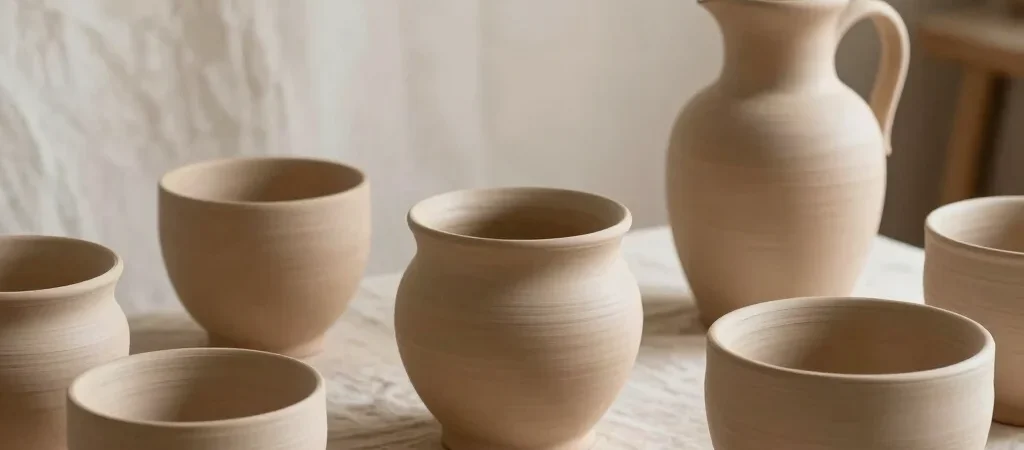
Every vessel begins deep within raw earth, carrying minerals that respond dynamically to the atmosphere of the kiln. Unlike industrial ceramics uniform in color and texture, hand-thrown stoneware retains the memory of the potter's fingers and the erratic nature of intense heat. When raw clay meets slow atmospheric firing, natural iron oxides bloom across the surface in unpredictable, earthy hues.
From Unrefined Mineral to Hand-Thrown Form
The journey begins on the potter's wheel where tactile raw clay is shaped into clean, architectural silhouettes. Working with coarse, unrefined clays demands an intimate understanding of moisture and tension. As the wheel spins, water and clay yield organic contours that celebrate form over ornate decoration, setting the foundation for durable stoneware.
The Transformative Power of Slow Heat
Once air-dried to bone hardness, vessels enter the kiln for a slow firing process that can last over twenty hours. As temperatures climb past two thousand degrees Fahrenheit, trapped minerals fuse into glass and dense clay bodies. The gradual cooling phase allows warm beige and muted terracotta tones to settle naturally into the ceramic wall.
Embracing Imperfect Tones in Grounded Spaces
No two pieces emerge from the kiln identical, leaving subtle variations in glaze weight and flame markings. These subtle variations transform everyday tableware into functional art that brings texture into minimalist homes. Placing a hand-thrown piece on your table connects daily routines with ancient earth and mindful craftsmanship.